
Writing Lessons From… Shrinking
Woof!

Before we start, there will no longer be regular Monday Dollops as I try to find a new balance between this project and new projects that I’m starting… Ooh, mysterious!
As I move from reminiscing about stories from my youth and return to the present day, I’ve been reminded of how lucky we are when a great story is given to us.
A lot of the great stories get cancelled these days, before they’ve really had a chance.

Which is why I was over the moon when Shrinking got a second season.
Would it be as good as the first?
Spoiler: YES!
I’ve withheld from writing about Shrinking on here so far, purely because when a story is beautifully and brilliantly written, it’s so hard to find the cracks to stick your fingers in, to open it up and dissect it.
But I think I managed to break it down enough as we hurriedly caught up with season two, so here we go.
Ahead are spoilers. Ones you might want to share with your therapist.
(Shrinking is available on Apple TV.)

Shrinking is sooo good. Do you know why?
Because it’s created by the people who brought us Scrubs and Ted Lasso. That’s why.
These are talented people – I’m looking at Brett Goldstein here.
(The brilliant actors also play a part – Harrison Ford, for crying out loud!)
Dissecting Shrinking, or anything as good as Shrinking, means taking a step back while you’re watching or reading, which is hard because you’re immediately engrossed, due to the goodness I mentioned.
Jimmy (Jason Segal) lost his wife in a tragic road incident years ago and, as we meet him, he’s only just surfacing from the deep grief and rock bottom. Thankfully, he’s surrounded by wonderful people who have kept his life afloat in the meantime.
His neighbour, Liz, who basically raised his daughter while he was spiralling, best friend Brian and his colleagues, Gaby and Paul (Harrison Ford).
Jimmy, Gaby and Paul are therapists, working in the same practice. Jimmy starts to break the surface of his grief by finding new joy in his work, breaking through what’s expected of him, taking risks (much to Paul’s dismay) and rejoining reality, particularly with new client, Sean, who is back from Afghanistan, struggling to control his anger.
The themes of Shrinking are heavy
The whole show starts with unimaginable pain and grief. Jimmy and Alice have lost their wife and mother, respectively, and it’s turned their lives upside down. Alice has effectively lost both her parents, despite Jimmy starting to come around.
Add to that Sean’s PTSD, mental health issues, Gaby’s issues around dependency and addiction (her partner’s and mother’s), chronic illness in the form of Paul’s Parkinson’s, the fear and reality of divorce, the fear of starting a family, of who you are once your family has grown up and flown the nest, when you’re lacking purpose in your life…
And then there’s the additional clients and their woes: domestic abuse, controlling relationships, attempted murder.
Shrinking has some heavy, deep stuff in it.
Yet, it’s punctuated and carried with humour and love.
Because, what’s the opposite to tragedy and pain? Humour and love.
Some people might want stories of pain and tragedy and grief and fear, but most of us want stories that offer escapism.
Somehow, Shrinking does this.
What on earth makes Shrinking so good?
Allow me to sit here and stare at you, much like a therapist, until you work it out for yourself.
Give it time.
Have a really good think.
What’s that?
Yes! It’s the characters!
Each one is well developed, each one has layers, and each one brings something loveable, relateable and wonderful to the situation.
Jimmy, our main character, is an arsehole. He’s selfish and self-centred and, at times, disgusting. He’s also a good father when he tries and gives it some thought, and a damn good therapist. He’s clever and kind and thoughtful, once he climbs out of his pit of despair.
And this isn’t just because of the grief, it’s because a human can be all of these things at once.
Sean isn’t just an ex-soldier that’s been chewed up and spat out, kicked out by his father who doesn’t seem to understand what his son has been through, and who sees red at the click of a finger.
He’s also a sweet, clever man with dreams of owning his own food truck. He’s talented and caring. He’s there for Alice when she needs him, like the big brother she never had.
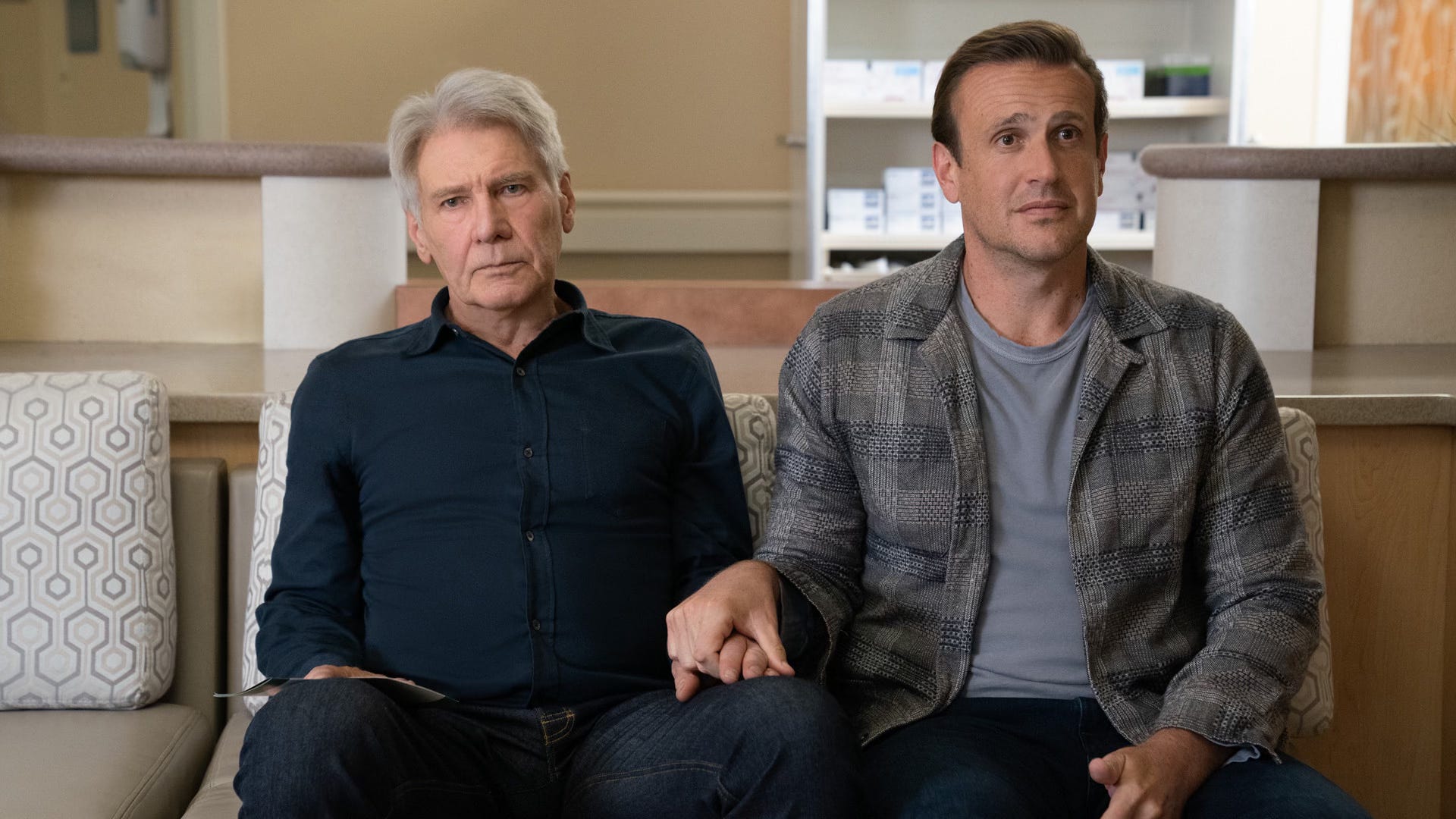
Paul has such an ego on him that it’s a shock he can fit through doors, and he’s aloof. How is anyone supposed to get close to him with such tight boundaries? Yet, he helps Alice through her grief when her dad can’t. He allows his friends to help with his Parkinson’s, even if he’s grumpy about it.
And, in season two, he starts to take advice from Jimmy about his boundaries.
He’s good and kind and incredible at what he does, but he still has the capacity for learning and growth.
That’s the other thing.
All of these characters are well developed, but they also each have their own arcs. Their own journeys.
Liz is loud and abrupt and loves with every cell in her body, but dig a little deeper and she’s vulnerable and insecure. She gives out polished rocks to the people she loves the most, like her own sort of mafia code initiating them into her circle and promising them she’ll always support them, but every now and then she breaks down.
Which is where her husband, Derek, comes in. (Derek is amazing. We all need a Derek.) Until he doesn’t, because even Derek is fallible.

Liz and Gaby are actually my favourite characters, and they have something in common. These two women, with different backgrounds and dreams and motives, are both loud, unapologetic and don’t afraid to say what they think (and the trouble that brings add to their stories).
And they’re funny!
While watching scenes with Gaby and Liz, breaking my heart and then making me laugh, I wondered if that’s where the humour came from. From being loud and unapologetic.
From saying what comes into your head first.
Don’t get me wrong, comedy is a skill that must be learned and practised. But as you’re learning it, do you ever find that you want to say something that could be funny, but you hold it back for fear of others’ reactions?
Gaby and Liz don’t.
It’s such a joy to have characters who say what you’re thinking, or who are capable of seeing through something to the funny side, to lighten the scene or provide a segway to something new.
And it’s perhaps necessary when creating something that deals with such heavy, triggering reality-based themes, to add as much humour as the story can tolerate.
Never force it in, but find the characters who are naturally funny.
Remember, there are different types of humour to play with.
Gaby and Liz are quite similar in their humour, but Brian is something else. They all play beautifully together when put in the same room, but the language and reactions will be different with all three.
When in doubt, listen to your characters.
And you can’t do that unless you’ve developed them well enough. Make them whole, give them layers, make them multi-faceted. Give them baggage and issues, fears and dreams, give them hope, batter them, push them, hold them up.
Once you have them, don’t silence them. If they want to be loud, let them be loud. Don’t be scared to go for it – if we can’t do it through our writing, then when can we?
If you’re worried about speaking up in the real world, then follow those instincts in your writing and let your characters shout.
The other lesson from Shrinking?
When Harrison Ford didn’t reply to the offer of playing Paul, Brett Goldstein went to his house, knocked on his door and offered him another copy of the script.
Ford’s house was full of scripts, and he’d either read it and not cared, or it had been lost in the piles.
After Brett left Harrison’s house, they got the call they’d been hoping for: Harrison Ford wanted in.
Sometimes, after the writing is done and the story is told, it’s time to take the bravery of your characters into the real world, to fight for them and give them justice.
Lose yourself in writing and characters and stories, but don’t forget to take the best bits of your creations to bring them into the real world.